
The InchKeepers Code
What it means to own a square inch of Scotland — and to keep it wild for good.
Somewhere in the Kingdom of Fife there is a hillside that will never be built on.
No houses. No car park. No development opportunity. Just heather and trees and whatever lives in them, left alone, season after season — and it stays that way for a reason that has nothing to do with luck.
The hillside has been divided into square inches, and every one of them has been accounted for in the InchKeepers register.
What happens when you give an inch
Someone opens an email and finds a land deed with their name on it: a numbered square inch of the Bandrum Estate, recorded in the Register of High InchKeepers.
It's properly theirs. Scots law won’t let a plot this small be registered with the Land Register, so the inch is leased to them for 175 years — the longest term the law allows — extendable indefinitely, free of charge, and after that it belongs to them and their successors for good. There is never another cost. The £5 is the only money that will ever change hands.
They can leave it to their children. It passes on with everything else they own. And from the moment their name goes on the deed they are an InchKeeper: a guardian of the land. Not a laird. Not a lord. Not a Lady. Nothing to wave about at a dinner party. A guardian is someone in whose name a piece of wild Scotland stays wild.


Why it can never be built on
The hillside can’t be cleared, dug, fenced, built on or developed — not by us, not by anyone — because it no longer belongs to one owner who could say yes. It belongs to hundreds of thousands of people, an inch at a time, and every deed carries the same rule: the land stays exactly as it is.
Joined together, the inches make what the deeds call an impenetrable barrier to development. That is the whole mechanism. Not a promise, not a pledge — a hillside that simply cannot be sold out from under itself.
Which is why the trees on it keep growing, the flowers come back every spring, and the animals keep their homes. The land protected eternally in their name, whether they think about it or not.
A 'High InchKeeper' is someone who has been chosen as a guardian of an inch of Scotland. The inch itself is small. What it means to receive it - is not.
That's the gift. The inch is just where it lives.
Who it’s for — everyone and anyone
They don’t need Scottish ancestry. They don’t need to have been here. They don’t need to have any particular feeling about Scotland at all — the hillside does its work regardless of who is watching.
What you need is an occasion. There is usually one coming.
Birthdays. An unusual birthday gift for him or for her — and for boys and girls, an inch they will still have when they are forty.
Weddings. A unique wedding gift: two names, one inch, and the date it all started.
Anniversaries. An unusual anniversary gift for the couple who stopped buying each other things years ago.
Retirements, graduations, new jobs. A unique congratulations gift that outlasts the card it came with.
Father’s Day. From a son or from a daughter. He will not be expecting land.
Christmas. For him, for her, for the kids, for couples. There is a stocking filler and a Secret Santa under a fiver that will make every other one in the pile look like a keyring.
Or no occasion at all. For the person who has everything and nothing they would actually miss. The one who says don’t get me anything.
Whichever it is, the moment plays out the same way. They open it expecting a gift card, and the polite thank-you stops halfway: “hang on — this is real?”
And yes — if they have ever watched Outlander or Braveheart and felt something, this will land even harder. That is a bonus, not a requirement.
They can go and stand on it
It is a real hillside, forty minutes from Edinburgh, and InchKeepers are welcome to walk up and find their inch. From the top, in a single turn: Stirling, the Wallace Monument, Ben Lomond, the Firth of Forth and its bridges, and Edinburgh Castle in the distance. Not a bad view to have your name on.


The code
There is no membership test, no oath in old Gaelic, no fee beyond the £5 that put their name on the deed. But there is a code, and InchKeepers tend to recognise it in each other.
1. We choose meaning over noise.
When a gift could be thoughtful or it could be safe, we choose thoughtful. Every time. (You already did.)
2. We leave it standing.
Not built on. Not developed. Not tidied up or improved. The most useful thing anyone can do for a wild place is let it get on with being one.
3. Anyone can be a guardian.
By birth, by ancestry, by a film that got under your skin, or by nothing at all — it makes no difference to the land. Everyone is a guardian the moment their name goes on the deed.
4. We hold it for the ones after us.
An inch outlives the person given it. It passes down, name to name, and the hillside it protects goes on being a hillside.
5. We tell the stories.
Of the grandmother whose name is on an inch she never stood on. Of the proposal. Of the first birthday. Your story is about to be one of them.
Make someone an InchKeeper — £5
The unique gift for the person who has everything. Instant email delivery, any time of day, and never another penny after the first five.
Why an inch matters more than you think
People underestimate small things. They shouldn't.
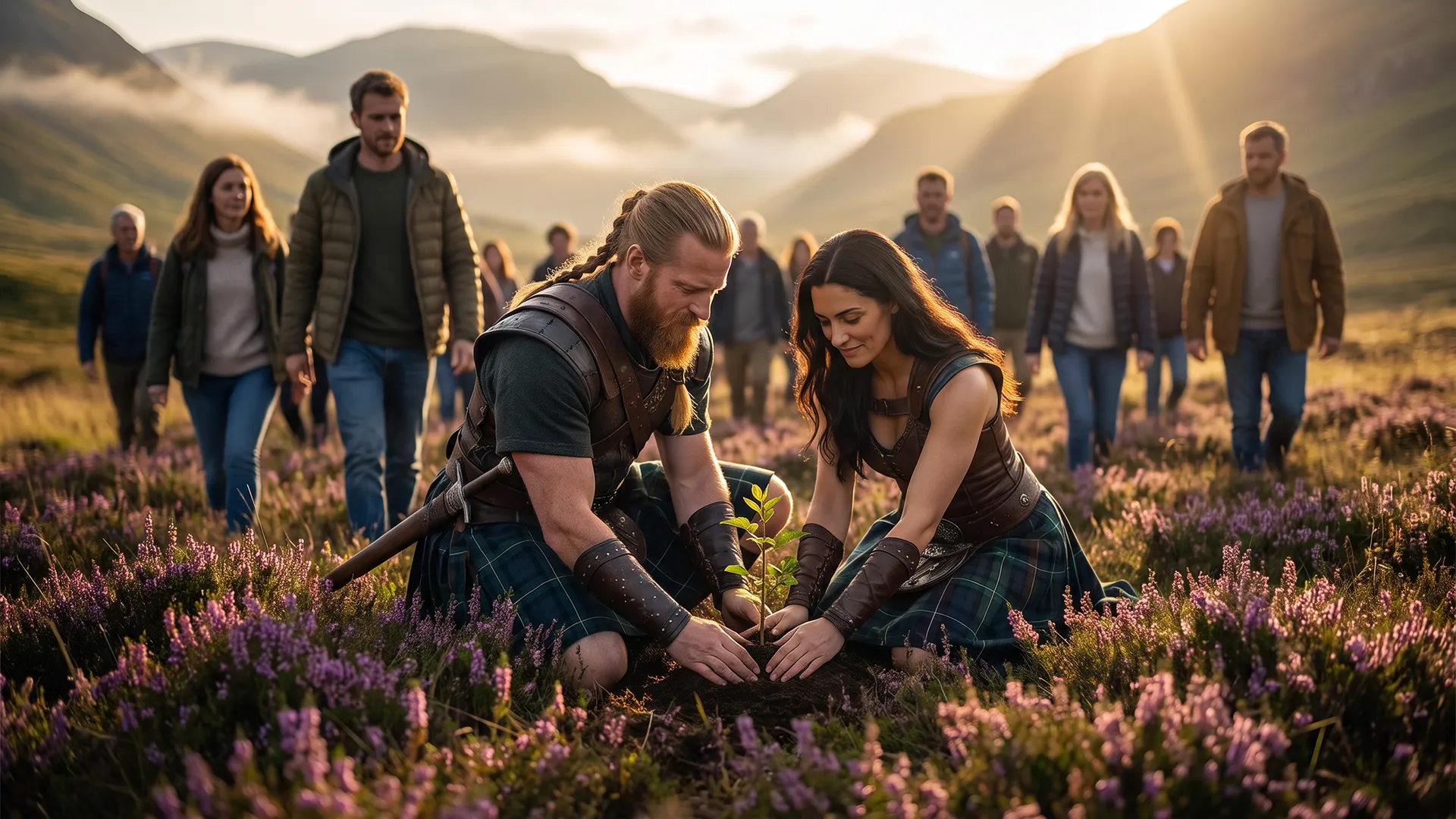
A square inch is enough room for a seed. A seed is enough for a sapling. A sapling, given a few decades and a sheltered glen, is enough for a tree that outlives the person who planted it. That's how forests are made, and that's how the land we love stays standing.
The inches add up. The one you're about to give, plus the one a stranger in Tennessee gave his daughter for her first birthday, plus the thousands of others — they make a real estate, in both senses of the phrase. A real piece of land. And a real community of people who were chosen by someone who knew them well.